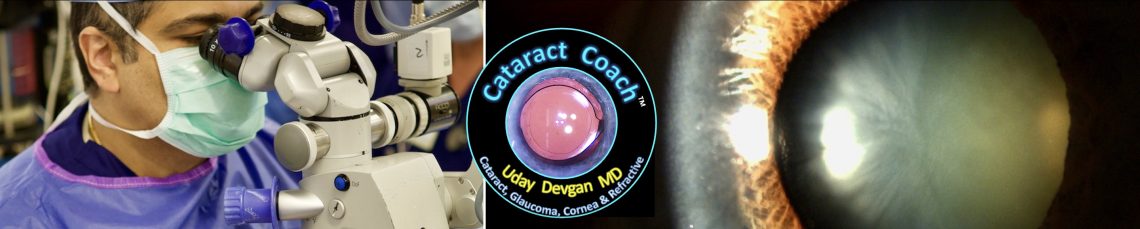


Cataract surgery in an eye with a posterior capsule rupture from a prior intravitreal injection requires careful preoperative planning and intraoperative adaptability. These cases often present with compromised capsular support, vitreous prolapse, and altered lens stability, all of which increase the risks of zonular stress and dropped nuclear material. This patient also had a prior pars plana vitrectomy, so there is no anterior hyaloid face and any displaced lens material will quickly fall back into the vitreous cavity. A thorough slit-lamp assessment and ultrasound biomicroscopy, when available, help define the extent of the defect and guide expectations. Do an A-scan or B-scan ultrasound and you can see the extent of the issues ahead of time like in this case.
Intraoperatively, the priorities are maintaining anterior chamber stability, minimizing lens manipulation, and anticipating early vitreous involvement. Surgeons often modify their usual fluidics and sequencing to reduce stress on the weakened capsule. Anterior vitrectomy may be required to clear prolapsed vitreous and create a safe environment for lens removal and IOL placement. Lens choice depends on remaining capsular support; options may include sulcus placement with optic capture or alternative fixation methods. With cautious technique and appropriate contingency planning, visual outcomes are generally favorable. If you have experienced a case like this, please comment below.
