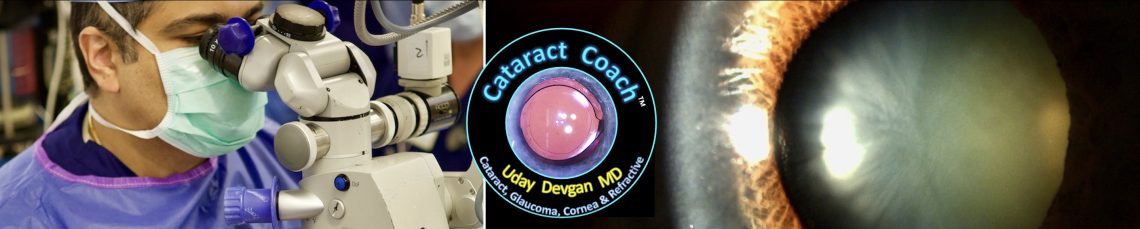


3117: intumescent congenital cataract causing glaucoma

Managing an unusual intumescent congenital cataract presenting with phacomorphic angle closure and elevated intraocular pressure requires controlled decompression to prevent an uncontrolled capsule runout. The high intralenticular pressure pushes the iris-lens diaphragm forward, shallowing the anterior chamber and narrowing the angle. Prior to initiating the capsulorhexis, performing a central needle decompression to aspirate pressurized, liquefied cortex flattens the anterior lens capsule and deepens the anterior chamber. Reinforcing anterior chamber depth with a high-viscosity cohesive viscoelastic further stabilizes the capsular plane, enabling the creation of a well-centered, continuous curvilinear capsulorhexis. Once pressurized cortex is removed, the angle opens, intraocular pressure normalizes, and lens aspiration proceeds safely. But the catch is: what do you do with the fibrosed and opaque posterior capsule? Watch the video to see how central needle decompression and controlled capsulorhexis construction successfully resolve phacomorphic angle closure in this complex case. What is your primary technique for decompressing high intralenticular pressure in swollen or intumescent cataracts? Please comment your thoughts below.
