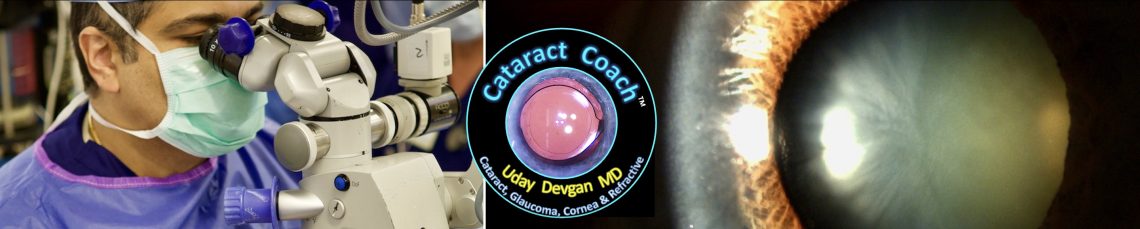


3070: Managing Phacolytic Glaucoma

Managing phacolytic glaucoma requires careful control of intraocular pressure and high intralenticular tension within a hypermature, intumescent cataract. In these eyes, high intralenticular pressure increases the risk of an uncontrolled Argentinian flag sign if a standard continuous curvilinear capsulorhexis is attempted directly. Performing a initial “baby rhexis” puncture allows the surgeon to aspirate liquified cortex, decompressing the capsular bag prior to expanding the capsulorhexis to a full, functional size. Once capsular tension is relieved and visibility is restored by washing out inflammatory debris from the anterior chamber, the dense nucleus can be safely phacoemulsified with minimal stress on fragile zonules.
Watch the video to analyze the exact puncture technique, decompression steps, and capsulorhexis expansion strategy used to safely navigate phacolytic glaucoma. What is your routine protocol for decompressing intumescent lenses before enlarging the anterior capsular opening? Please comment your thoughts below.
