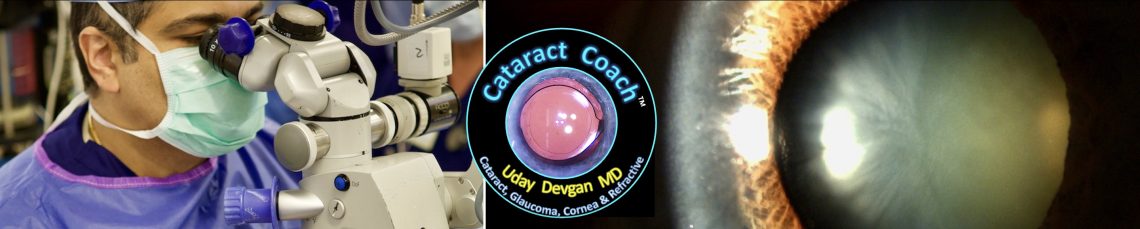


Four surgical pearls to assist in cataract surgery in pseudo-exfoliation eyes
Managing cataract surgery in patients with pseudo exfoliation syndrome, a systemic basement membrane disorder that compromises the structural integrity of the lens suspension system, the pupil dilation, and the aqueous outflow pathways. For the experienced surgeon, success is found in anticipating zonular failure before it becomes an intraoperative crisis. By focusing on a few critical pearls identified during the key stages of the procedure, a surgeon can navigate these high risk cases with the same predictability as a routine operation.
Identifying the Diagnostic Red Flag
Success in a pseudo exfoliation case begins at the slit lamp microscope during the preoperative examination. The surgeon must look for the pathognomonic fibrillar deposits on the anterior lens capsule. These deposits represent abnormal protein material produced throughout the eye. While they can be seen on the iris margin and in the angle, their most critical location is on the lens surface itself.
In a classic presentation a central frosted disc of material is present (figure 1). However, the most important diagnostic clue is the zone of clearing. This clear ring is created by the iris as it physically brushes the material off the capsule during pupil movement. When a surgeon identifies this pattern, it serves as a primary warning that the zonules are likely brittle and prone to breaking under stress. These deposits infiltrate the zonular fibers and their attachments to the ciliary body. Identifying this early allows for proper planning of fluidics and support devices so the surgeon is not surprised by a wobbling lens later in the case.

Confirming Zonular Laxity upon Entry
The moment of truth occurs during the first touch of the lens. In a healthy eye with a robust suspension system, the anterior capsule has the tension of a drumhead, which allows for a sharp and clean puncture. In an eye with pseudo exfoliation, the zonules often behave like old rubber bands that have lost their recoil. This lack of peripheral tension results in significant capsule laxity.
As the surgeons attempt the initial puncture, they must watch the capsule surface to see if radial wrinkles or striae form around the needle or cystotome because this confirms zonular weakness (figure 2). In severe cases, the entire lens complex may shift from the pressure of the instrument. This is a vital cue to shift gears. The surgeon should avoid aggressive maneuvers and consider using high viscosity ophthalmic viscosurgical devices to stabilize the lens and provide some counter tension. If the capsule bunches up rather than puncturing cleanly, the rest of the case will require care to avoid a significant zonular dialysis.

The Importance of the Right Capsulorhexis
The capsulorhexis is the foundation of the entire procedure. In these patients, the size of the opening is a clinical requirement for the long term stability of the intraocular lens. The surgeon should aim for a 5.0 to 5.5 millimeter diameter capsulorhexis (figure 3).
This specific range is critical because pseudo exfoliation eyes are notorious for the late complication of capsular phimosis. Because the zonules are weak, the capsular bag lacks the outward tension needed to resist the natural contractile forces of postoperative capsular contraction. If the opening is too small, it will constrict over time and pull the zonules inward, which can eventually cause the entire intraocular lens and capsular bag complex to dislocate. Conversely, an opening that is too large may not provide enough of an anterior capsule to hold the IOL optic securely.

Ensuring Long Term Stability through Polishing
A clean capsular bag is essential in the context of pseudo exfoliation. These patients have a significantly higher propensity for lens epithelial cell proliferation and metaplasia. These cells are the primary drivers of posterior capsular opacification and the aggressive shrink wrapping of the capsule that leads to phimosis.
The final insurance policy for the surgery is the polishing of the anterior capsular rim. We can use capsule polishers to manually remove the microscopic lens epithelial cells from the underside of the anterior capsule (figure 4). By vacuuming or scraping these cells away, the we can mitigate the risk of capsular contraction. This also reduces postoperative inflammation and ensures that the capsule remains clear. In this type of surgery, the goal is to protect the patient from vision loss ten years down the line. Meticulous polishing can help keep the intraocular lens centered and the capsule stable for the duration of the life of the patient.

The Surgeon Mindset of Vigilance
By adhering to the principles demonstrated in these four pearls, we can shift our mindset reactive to a proactive because the best way to handle a complication is to prevent it from happening in the first place. With pseudo exfoliation, the best tools are not just the phacoemulsification machine or support devices. The best tools are observation, patience, and a commitment to a clean and stable capsular bag.
