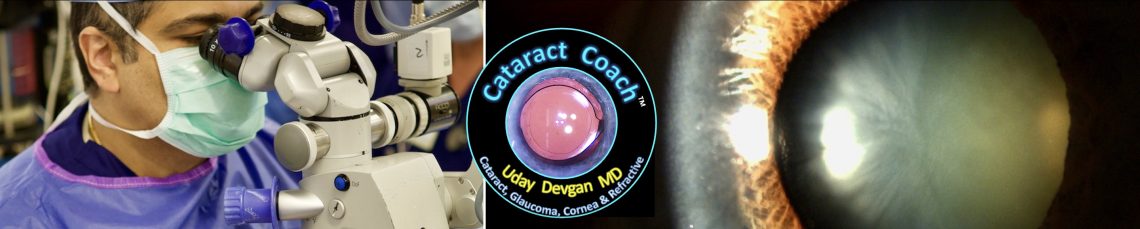


This surgical case highlights the management of a patient with cataract and significant granular corneal dystrophy. Surgeons often worry that these dense stromal opacities will preclude a good visual outcome or necessitate a combined triple procedure. However, the pearl here is that performing standard cataract surgery alone is often sufficient to achieve excellent patient satisfaction. While the corneal dystrophic changes may limit your view during the procedure, the central visual axis is frequently clearer than the peripheral opacities suggest. By focusing on a high-quality phacoemulsification and precise IOL power selection, you can significantly improve the patient’s functional vision without the added morbidity of a keratoplasty. We discuss the importance of maximizing the coaxial red reflex, and reducing the paraxial illumination, to aid in visualization and why we should delay corneal intervention until after the postoperative refractive result is assessed. Often, the cataract is the primary culprit for the vision loss, making the corneal surgery unnecessary.
