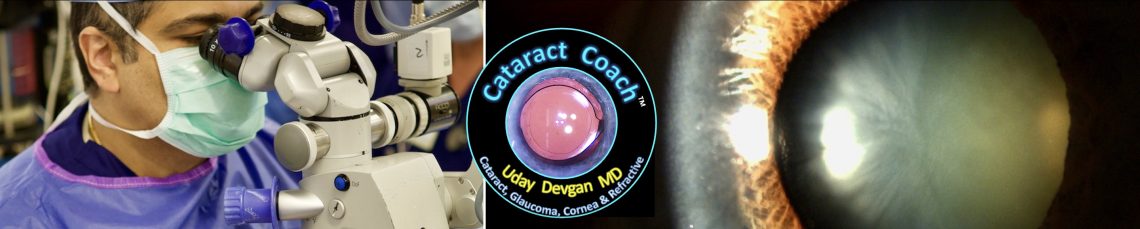


The Challenge of the Dense, Brunescent “Coca-Cola” Cataract
When a cataract is described as a “Coca-Cola” type, it often refers to the deep, dark mahogany or deep brown hue of a hypermature, brunescent nucleus. Unlike the liquefied Morgagnian variety, this cataract is characterized by extreme density and a lack of soft cortical material. The dark pigmentation is a clinical marker for a rock-hard nucleus that has undergone significant protein cross-linking over many years.
Surgical management of these dense cataracts requires a shift in strategy. Because the nucleus is voluminous, leathery and fibrous, traditional cracking maneuvers can be difficult since the posterior plate is often incredibly tenacious and resistant to separation. Surgeons must prioritize corneal endothelial protection by using dispersive viscoelastics (often with multiple recoats) and performing phacoemulsification within the capsular bag. Utilizing high vacuum and specialized power modulations, such as longitudinal or torsional ultrasound, is essential to disassemble the wood-like density without causing excessive thermal energy or zonular stress.
What are you best pearls for these tough cases? Please comment below.
