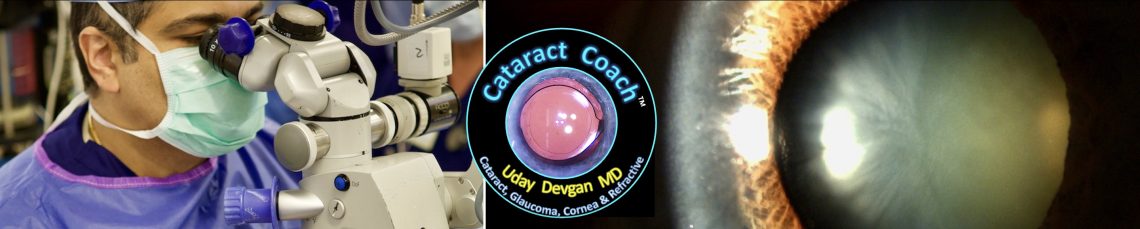


Hydrophilic acrylic IOLs are valued for their biocompatibility but are uniquely susceptible to calcification with the deposition of calcium and phosphate crystals within the lens polymer. This opacification cannot be cleared with a YAG laser because the problem is within the IOL and not with the capsule. Primary calcification typically stems from manufacturing or packaging contamination, while secondary calcification occurs when the eye’s internal chemistry is disrupted. Significant risk factors include uveitis, diabetes, and most commonly, subsequent surgeries involving intra-ocular gas or air, such as DMEK/DSEK or vitrectomy, which can trigger mineral precipitation. While general incidence is low (0.1%–0.6%), specific models have faced major clinical challenges. The Oculentis implants (which is what this IOL appears to be, but I cannot be 100% sure) are a prominent example, having been subject to recalls after showing opacification rates as high as 11% in long-term studies. These failures were largely linked to phosphate-containing detergents used during the manufacturing process, which acted as a catalyst for crystal growth. The answer? IOL exchange. Have you ever explanted an opacified IOL? Please comment below so we can learn together.

I have removed calcified Lenstec, Akreos, Rayner, Occulentis, hydrophilic IOLs from patients many times and many of these eyes have had nothing more than cataract surgery and/or YAG capsulotomy. Hydrophilic acrylics calcify over time in many patient even if no secondary surgical procedure is performed. The literature is replete with case reports of these happenings. If these patients do have a secondary procedure the risk increases of course ….especially if the lens is exposed to air but it needs to be known that this is not a “manufactering” issue ….it is inherent in the material. I stopped using all hydrophilic IOLs once I understood this risk and recommend that others consider this as well.