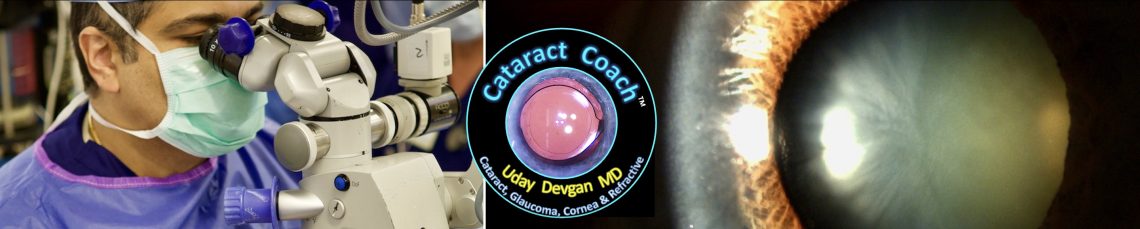


Managing a dense, brunescent cataract complicated by anterior capsule fibrosis requires careful modification of standard phacoemulsification techniques. The dense nucleus necessitates increased phaco power and extended time, risking corneal endothelial damage. The fibrotic, often rigid, anterior capsule poses a significant challenge for the capsulorhexis. A standard Continuous Curvilinear Capsulorhexis (CCC) can be difficult due to the capsule’s resistance to tearing, often requiring sharp instruments like a cystotome or micro-scissors to initiate the tear, and meticulous viscodissection to separate the capsule from the cortex. A smaller CCC may be necessary to minimize the risk of radial tears, especially when the lens is intumescent. For nuclear management, I recommend a chop technique rather than a divide-and-conquer, as it minimizes energy use and stress on the zonules. Given the density, generous use of a viscoelastic device is crucial to protect the corneal endothelium.
