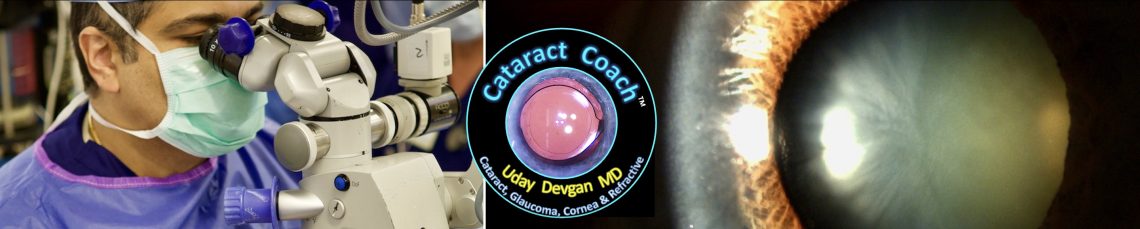


Performing cataract surgery in an eye with a Kamra corneal inlay requires managing a physical obstruction in the surgeon’s line of sight. Because the inlay is an opaque disc with a 3.8 mm total diameter, it acts as a central blind spot between the microscope and the lens, hiding the mid-peripheral view of the anterior capsule and the nucleus.
Navigating the Obstruction
The primary challenge is that the inlay is positioned in the corneal stroma, directly blocking the view of the surgical tools as they move toward the periphery. Completing a 5.0 mm to 5.5 mm continuous curvilinear capsulorhexis is technically demanding because the inlay hides the needle or forceps during the most critical parts of the tear. To compensate, the surgeon must frequently tilt the globe or adjust the microscope’s optical axis to peek around the opaque edges of the mask to visualize the hidden segments of the capsule. Or use the Jedi mind force 🙂
Intraoperative Strategy
When the inlay is kept in situ, maintaining a stable anterior chamber is vital to prevent corneal distortion that could affect the inlay’s pocket. Phacoemulsification and cortical cleanup must be performed with high awareness of the inlay’s position, as the central 1.6 mm aperture provides only a limited window of direct visualization centrally. Using a monofocal IOL is generally the most reliable choice to avoid the optical issues that can occur when combining a small-aperture mask with multifocal or other light-splitting technologies.
If you have a case that we have not featured in our extensive library of videos, please submit it here so that all of us can learn together.
