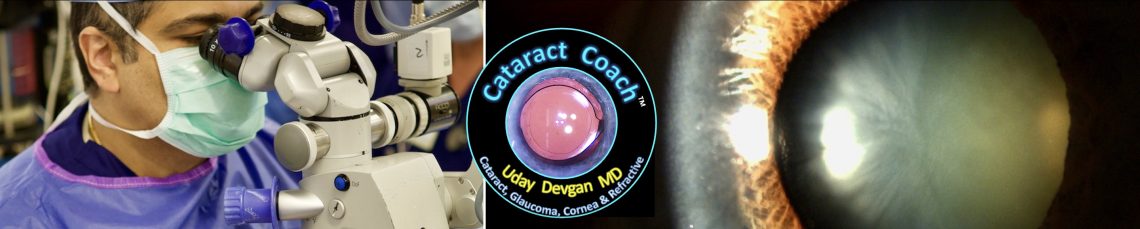


When a central corneal opacity obscures the surgical field, traditional coaxial microscope illumination often creates debilitating light scatter and glare, rendering the capsular bag nearly invisible. To bypass this “white-out” effect, surgeons utilize oblique transcorneal illumination by placing a fiber-optic light pipe at the limbus at a 45-degree angle. This off-axis lighting minimizes reflections from the scar, enhancing the contrast of the anterior capsule and nuclear density. For even greater clarity, intracameral endoillumination or a self-retaining chandelier system can be employed. These tools provide a “retroillumination” effect by lighting the eye from within, making the lens structures appear dark against a bright background (the red reflex), which is critical for safe capsulorhexis and phacoemulsification. By switching off the microscope’s coaxial light and relying on these alternative sources, the surgeon gains a stereoscopic view that would otherwise be impossible through a hazy cornea. This approach often allows for successful phacoemulsification, potentially sparing the patient from a higher-risk triple procedure (simultaneous corneal transplant and cataract surgery).
