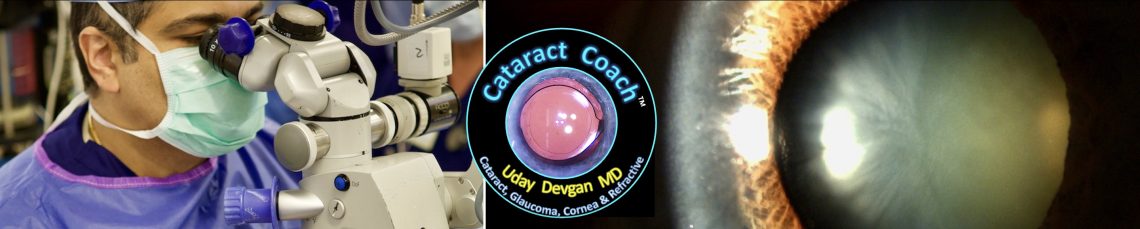


This patient has a posterior polar cataract and our guest surgeon is operating in an environment that does not have a vitrector available. We know these cases have a higher risk of posterior capsule rupture and vitreous prolapse. And that happens in this case so our guest surgeon has to use scissors to cut the vitreous. This is not as good as using a proper vitrector and it may pose additional risks. After confirming vitreous prolapse into the anterior chamber, maintain chamber stability with a dispersive ophthalmic viscosurgical device (OVD). Through a limbal incision, introduce micro-scissors under direct visualization, ideally with triamcinolone staining to identify vitreous strands. The goal is to sever vitreous adhesions at the wound and pupil margin without traction on the vitreous base. Work slowly, cutting rather than pulling, to avoid transmitting stress to the posterior segment. Frequently replenish OVD to maintain space and tamponade vitreous forward movement. Once all visible strands are cut and the pupil margin moves freely, gently sweep the wound with a spatula or OVD cannula to confirm the chamber is clear. Finally, reform the anterior chamber, inspect for vitreous incarceration, and proceed cautiously with intraocular lens placement in a stable, supported position.
